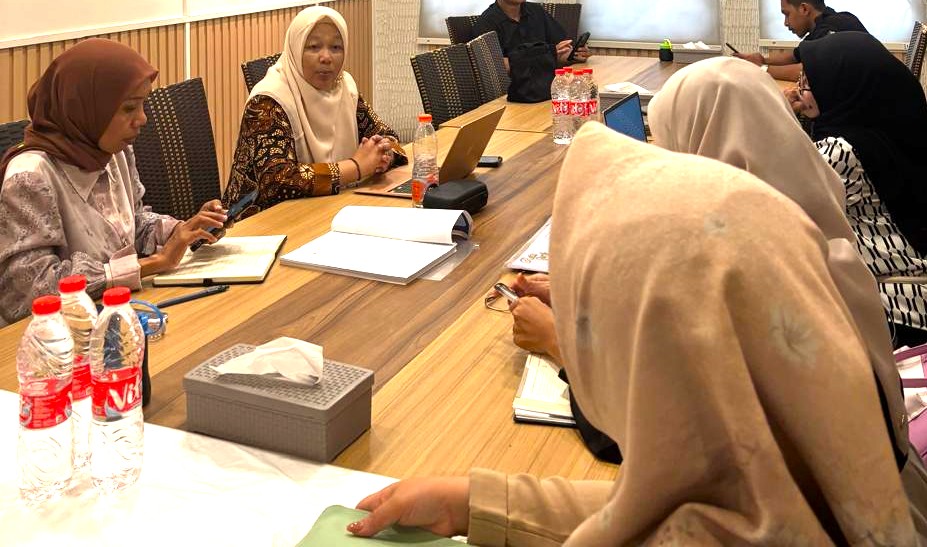
Makassar, Indonesia — On
Wednesday, 1 April 2026, a consultation session on the revision of an
Outcome-Based Education (OBE) curriculum was conducted at Rumah Makan Ratu
Gurih, located on Jalan Boulevard, Makassar. The event was organized as part of
an ongoing effort to refine and strengthen the curriculum previously developed
by the curriculum design team of the English Language and Literature Department
at Universitas Islam Negeri Alauddin Makassar.
The consultation aimed to
critically review and enhance the existing OBE-based curriculum, with
particular emphasis on revising the Program Learning Outcomes (CPL). It was
highlighted that the department’s CPL must accurately reflect and align with
the Faculty-level and University-level CPL to ensure coherence across
institutional standards. In addition, participants discussed the importance of
course distribution that integrates digitalization, responding to the demands
of contemporary educational and technological developments.
The session featured Dr.
Meinarni, Chair of the Quality Assurance Institute at UIN Malang, who served as
the main resource person. In her presentation, she emphasized that an effective
OBE framework requires coherence between graduate profiles, learning outcomes,
course structures, and assessment strategies.
Participants in the
session included Dr. Rosmah Tami, Head of the English Language and Literature
Department, and Sandra Dewi Dahlan, the department secretary. Also present were
Dr. Hj. Nahdiyah, Head of the Quality Assurance Unit, and Dr. Jumharia Djamereng,
representing the lecturers. All participants actively engaged in discussions,
providing insights into the strengths and limitations of the current curriculum
design.
The discussion further focused on several key areas, including the refinement of Course Learning Outcomes (CLOs), alignment between learning outcomes and course content, and the integration of appropriate teaching and assessment methods. Overall, participants agreed that continuous evaluation, collaboration, and responsiveness to technological developments are essential to ensure that the revised curriculum remains relevant, adaptive, and aligned with both academic standards and professional demands.
Writer: Jumharia Dj.