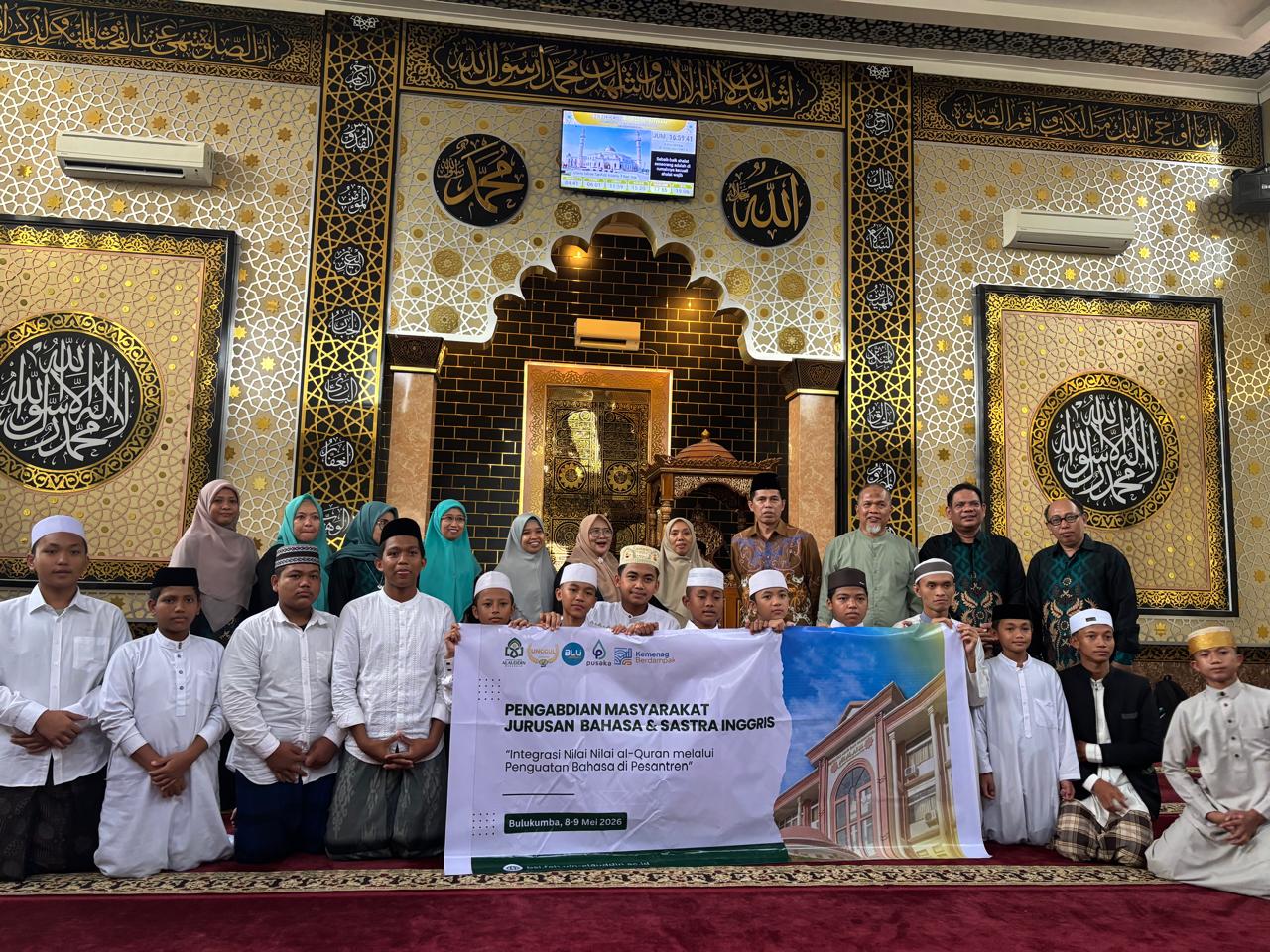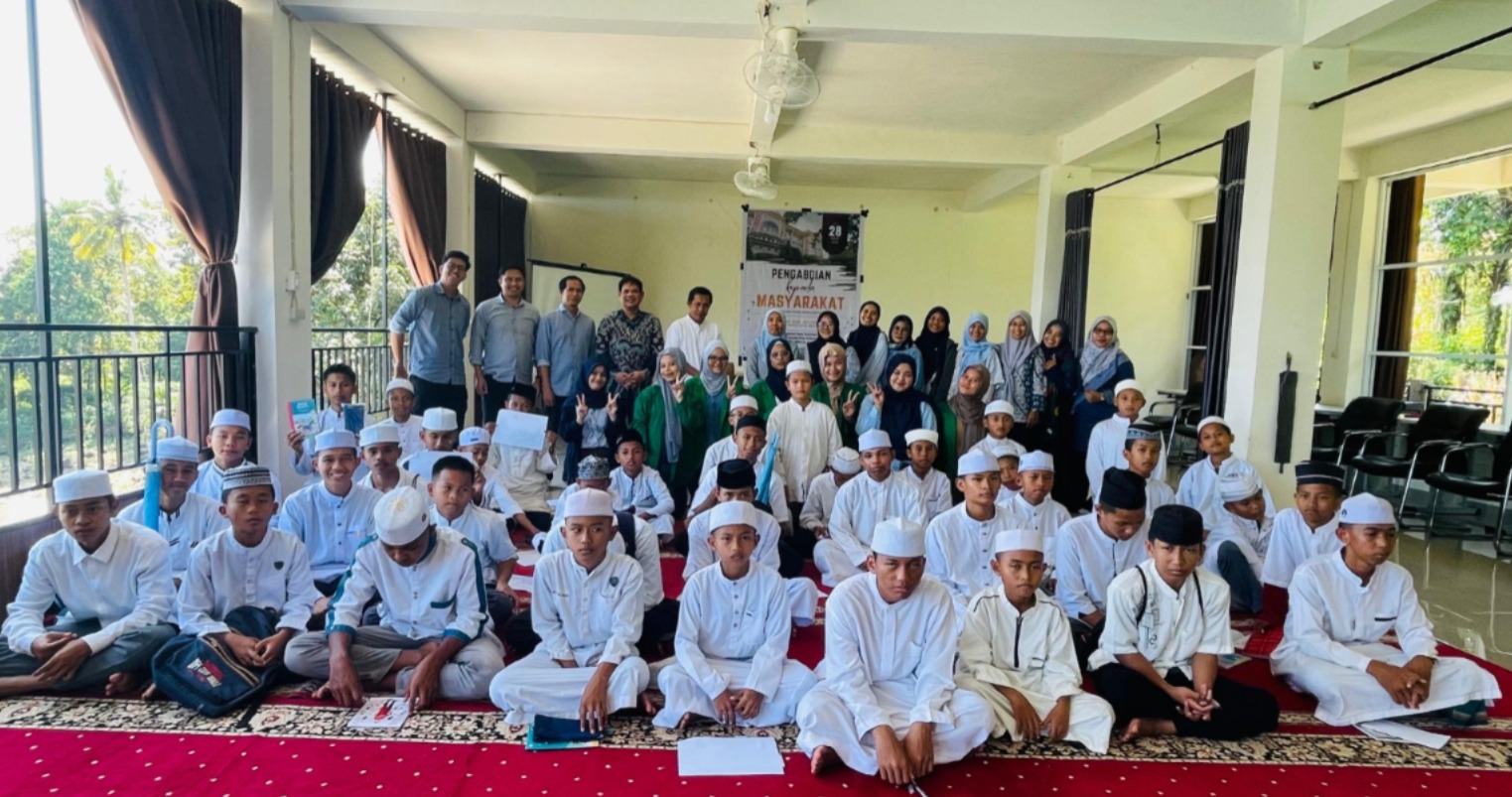
Gowa, 27 July 2025 — The English Language and Literature Program (BSI), Faculty of Adab and Humanities (FAH), at Universitas Islam Negeri Alauddin Makassar demonstrated its continued commitment to community engagement through a service program titled “Connecting with Culture and Nature.” The activity took place on Sunday, 27 July 2025, at Pondok Tahfidz Ashabul Jannah, involving both lecturers and students in active participation.
The program was designed as a cross-context learning experience integrating English language education, cultural awareness, and environmental responsibility, while also delivering direct benefits to the local pesantren community. The event was officially opened with remarks from representatives of the local education office and the boarding school leadership, followed by a Qur’anic recitation by the students as a spiritual opening.
One of the most inspiring sessions featured a motivational talk by Dr. Jumharia Djamereng, who encouraged the students to dream big and cultivate discipline in pursuing their future goals. Her message extended beyond academic achievement, emphasizing confidence-building and meaningful life values.
A literary segment was delivered by Ahmad, S.S., M.Lit., who presented an expressive storytelling performance of The Giving Tree by Shel Silverstein. The session conveyed themes of sincerity, sacrifice, and love for nature, engaging both students and participants in an immersive narrative experience.
The highlight of the program was a Spelling Bee competition centered on vocabulary related to nature and culture, which was enthusiastically received by the students. In addition, reflective discussions on environmental and cultural issues were facilitated by BSI students acting as mentors. The program concluded with prize distribution, group reflections, and closing remarks from the organizers and pesantren leaders.
This initiative reinforces the role of the English Language and Literature Program as not only academically driven but also socially responsive, contributing to literacy development, cultural identity strengthening, and environmental awareness among younger generations.